
Mandatory conformity assessment
Mandatory conformity assessment
Mandatory conformity assessment documents that a product meets the applicable technical regulation requirements. It takes the form of certification or a declaration of conformity and aims to ensure product safety and protect human life and health, property and the environment.
Where mandatory conformity assessment applies, it must be completed before the product is placed on the market, unless the technical regulation provides otherwise. The requirements apply to both domestically manufactured and imported products.
How to determine whether a certificate or declaration is needed
The need for conformity assessment depends on the product type, intended use and technical characteristics. Kazakhstan applies EAEU technical regulations, including current Customs Union regulations, and national requirements where provided by law.
Before preparing documents, establish:
- which technical regulations apply to the product;
- whether mandatory conformity assessment is required;
- whether a certificate or a declaration is required;
- which scheme applies to serial production, a batch or an individual item;
- which documents, tests and checks will be needed.
This requires product identification. A specialist reviews the description, intended use, composition or design, technical characteristics and documentation. The EAEU HS code is also considered, but the code or product name alone may not be sufficient to determine the requirements.
The review results may be recorded in a product identification report. The document records product information and conclusions about the applicability of the requirements reviewed.
An identification report helps determine the next steps, but does not replace a certificate or declaration where these are mandatory.
Certification and declaration: the difference
In certification, an accredited conformity assessment body confirms product compliance. It reviews documents, arranges the procedures required by the scheme and evaluates their results. A certificate of conformity is issued following a positive outcome.
In declaration, the applicant adopts a declaration of conformity based on evidence and takes responsibility for the accuracy of the information and product compliance. Depending on the scheme, the applicant’s own evidence and/or accredited laboratory test results are used.
Declaration also requires documentary evidence of compliance. It involves more than completing an application.
The applicable technical regulation determines the conformity assessment form and scheme. Only the options it provides may be chosen.
How conformity assessment works
1. Submit an application
The applicant provides information about the product, manufacturer and planned supplies, specifying whether the application covers serial production, a batch or an individual item.
2. Identify the product and determine requirements
A specialist reviews the technical documentation, clarifies product use and characteristics, and determines the applicable technical regulations and conformity assessment procedure.
When a product identification report is issued, it documents the review results. If mandatory certification or declaration is not required, the conclusion must refer to the specific product and requirements reviewed.
3. Prepare documents and conduct required checks
A document package is prepared. Depending on the regulation and scheme, the procedures may include sampling, testing, production assessment or other required checks.
The scope of work is determined for the specific product.
4. Evaluate results and issue the document
Once the required procedures are complete, the conformity evidence is evaluated.
For certification, the conformity assessment body decides whether to issue a certificate. For declaration, the applicant adopts the declaration on the basis of the evidence assembled. The document is registered in the prescribed manner.
5. Maintain compliance after issue
Product compliance must be maintained throughout the document’s validity. Surveillance is carried out if the scheme provides for periodic assessment of certified products.
Changes in design, product composition or manufacturing technology may require further assessment and revision of previously issued documents.
Documents to prepare
For an initial application review, we recommend sending:
- product names, brands, models or item numbers;
- intended use and key technical characteristics;
- manufacturer and applicant details;
- a technical passport, operating manual or other available documentation;
- the EAEU HS code, if determined;
- the supply format: serial production, batch or individual item;
- for a batch, the available contract, invoice and shipping documents;
- previous test reports and conformity documents, if available.
This is an indicative list for an initial enquiry. The final document requirements are clarified after product identification and selection of the applicable scheme.
Timeframes and costs
Conformity assessment timeframes and costs are calculated after reviewing the application. They depend on the product type, number of models, testing scope, sampling and production assessment needs, and completeness of the documentation.
Send a product description and available technical documentation for an initial estimate.
Apply for conformity assessment
Contact ELESAR LLP to determine the requirements for your product and the procedure for obtaining documents. Send manufacturer details, the product description and characteristics, and the planned supply format.
If you are unsure whether you need a certificate or declaration, start with product identification. Learn more about obtaining the document on the Product identification report page.
Sample documents
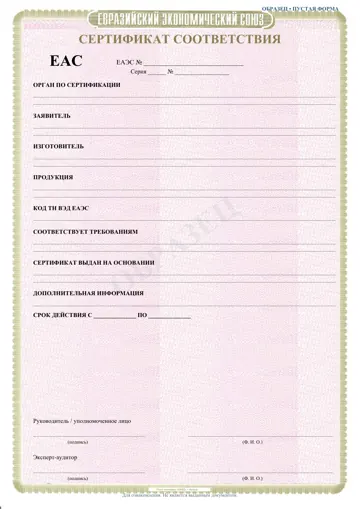
See what the documents look like. These are illustrative samples with blank fields.
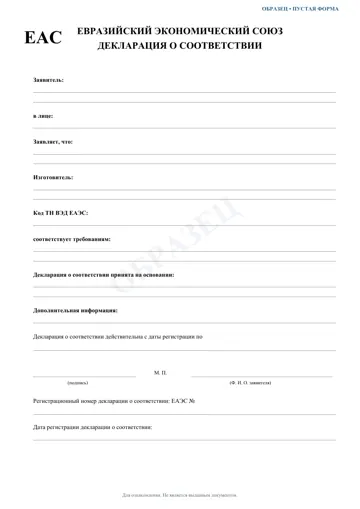
Documents are available in their original language.